


Professional monitoring vs. self-monitoring: Finding your best fit
Home security has changed dramatically in the past decade. Not long ago, most systems required professional installation and a monitoring contract. Today, DIY security systems and mobile apps allow homeowners to monitor their homes themselves, creating a new dilemma:
Should you pay for professional monitoring or handle alerts yourself?
Both approaches can protect your home, but they work very differently. Professional monitoring acts as a 24/7 safety net, while self-monitoring relies on you to respond to alerts in real time. The right option depends on your lifestyle, budget, and tolerance for risk.
In this guide, we’ll break down how each option works, the pros and cons of each approach in 2026, and how ADT Home Security systems give you the flexibility to choose the level of protection that fits your home.
What is professional monitoring?
Professional monitoring means your security system is connected to a staffed monitoring center 24 hours a day, seven days a week. When an alarm is triggered, trained security professionals respond immediately—whether you're at home, at work, or asleep.
With ADT systems, alarms connect to multiple monitoring centers that remain online even during certain outages or emergencies.
How professional monitoring works
A typical monitoring event looks like this:
- A sensor is triggered (door, window, motion detector, etc.).
- The system instantly sends a signal to the monitoring center.
- Security specialists verify the alert using system data or video.
- Emergency services may be dispatched if needed.
This process can happen within seconds—even if your phone is off or you’re unreachable.
Key advantage: Professional monitoring ensures someone is always watching your system, reducing the risk of missed alerts.
ADT’s monitoring expertise
ADT is one of the longest-running security providers in the U.S., with over 150 years of experience in home protection. Modern ADT systems also use SMART Monitoring technology, which integrates sensors, cameras, and smart devices to verify alarms and improve response accuracy.
In 2026, AI-powered detection can reduce false alarms by distinguishing between people, pets, vehicles, and environmental triggers.
What is self-monitoring?
Self-monitoring takes a hands-on approach to home security. Instead of a monitoring center responding to alarms, you receive alerts directly through your smartphone and decide what to do.
Many DIY systems—including ADT Self Setup—use mobile apps that send notifications whenever a sensor is triggered.
How self-monitoring works
The process is straightforward:
- A sensor detects motion, entry, or activity.
- Your system sends a push notification to your phone.
- You check the alert in the app.
- You decide whether to call 911 or ignore the alert.
If you miss the notification, the alarm sounds locally in your home.
The key difference
With self-monitoring:
- There is no third-party dispatch service.
- Emergency response depends entirely on whether you see the notification.
Overall, self-monitoring works best for people who are comfortable managing alerts themselves and regularly checking their phones.
Pros and cons: A 2026 comparison
Both monitoring types offer real benefits—but they also come with trade-offs. Here’s a side-by-side look at the most important differences:
Feature | Professional Monitoring | Self-Monitoring |
|---|---|---|
Response Time | Immediate response from monitoring center | Depends on how quickly you see the alert |
Emergency Dispatch | Monitoring center contacts police/fire/EMS | You must call emergency services yourself |
Monthly Cost | Monthly monitoring fee | Often free or low-cost |
Reliability | Typically includes cellular backup | Often relies on home Wi-Fi |
Insurance Benefits | May qualify for up to 20% homeowners insurance discount | Usually not eligible |
Convenience | “Set it and forget it” security | Requires active attention |


ADT Home Security options for 2026
One advantage of ADT systems is flexibility. Homeowners can start with a DIY setup and add monitoring later or choose full professional installation from the beginning.
ADT Self Setup
ADT Self Setup is designed for DIY homeowners who want an easy installation process.
Features include:
- Wireless sensors and cameras
- Setup using the ADT+ mobile app
- Optional professional monitoring
- Integration with smart devices like cameras and doorbells
Professional monitoring for ADT Self Setup systems starts at about $24.99 per month, depending on the features and equipment included.
The biggest benefit of this option is flexibility. After the initial monitoring period, homeowners can choose to switch to self-monitoring if they prefer.
Professional installation
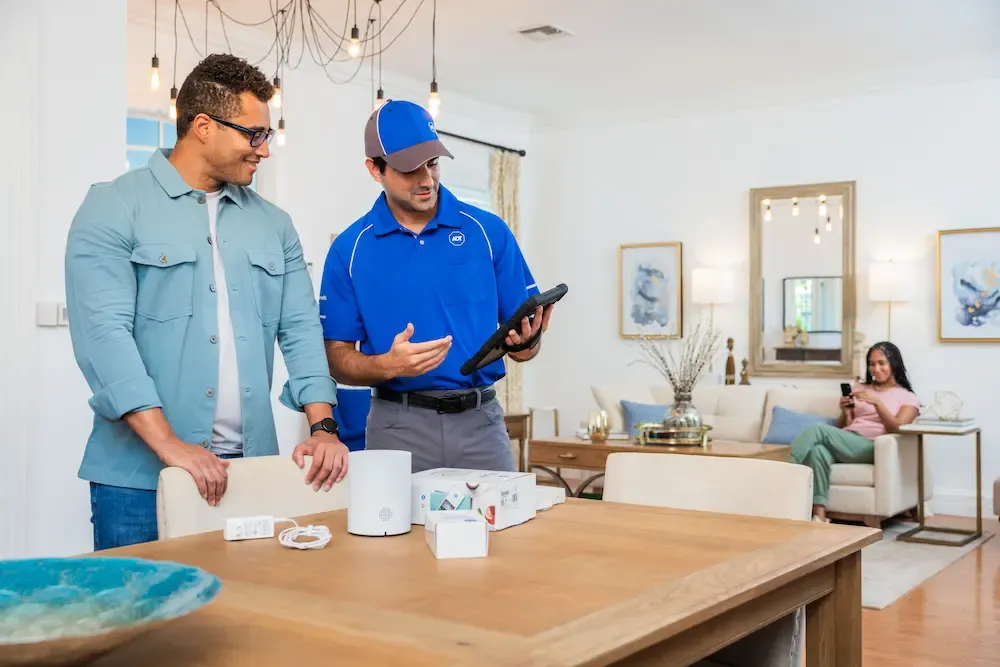
ADT also offers professional installation, where a trained technician installs and configures the entire system for you.
This “white-glove” approach typically includes:
- Expert sensor placement
- System testing and optimization
- Smart home integration
- Required professional monitoring
Monitoring plans for professionally installed systems typically start at $34.99–$49.99 per month, depending on features such as smart home control or video verification.
For many homeowners, the appeal is simple: experts handle everything from day one.
How AI reduces false alarms in modern security systems
One of the biggest improvements in home security in recent years is AI-powered detection.
Earlier alarm systems often triggered alerts from:
- Pets
- Passing cars
- Tree branches
- Shadows or lighting changes
Modern systems now use computer vision and smart sensors to reduce these false alarms. Examples include:
- Human vs. pet detection in cameras
- Smart motion sensors that ignore animals under a certain weight
- Video verification that confirms suspicious activity before dispatch
This technology benefits both monitoring types:
- Professional monitoring centers can verify alarms faster.
- Self-monitoring users receive more accurate alerts, reducing notification fatigue.
Which one is right for you?
The choice between professional monitoring and self-monitoring comes down to how much involvement you want in managing your home security.
Choose professional monitoring if:
- You travel frequently
- You want 24/7 protection even when you're unreachable
- You have kids, elderly family members, or pets at home
- You prefer a “set it and forget it” security system
- You want potential homeowners insurance discounts
Choose self-monitoring if:
- You’re on a tight budget
- You live in a low-risk apartment or building
- You enjoy managing smart home technology
- You are confident you’ll always respond to notifications quickly
For many homeowners, the sweet spot is to start with DIY equipment and add professional monitoring later, if needed.
Frequently asked questions
Can I switch from self-monitoring to professional monitoring later?
Yes. Many modern systems—including ADT Self Setup—allow you to upgrade to professional monitoring whenever you want. Monitoring plans can be activated through the app or customer support, giving homeowners the flexibility to change their protection level as their needs evolve.
Does self-monitoring work during a power outage?
It depends on the system. Many self-monitored systems rely on home Wi-Fi, which may stop working during power outages. Professionally monitored systems often include cellular backup and battery power, allowing them to continue sending alerts even when your internet is down.
Will I get a homeowners insurance discount with self-monitoring?
Usually not. Most insurance companies require proof of 24/7 professional monitoring before offering home security discounts. With professional monitoring, some homeowners can qualify for up to 20% off their insurance premiums, though exact savings vary by provider.
What happens if I miss a notification on a self-monitored system?
If you miss the alert, the system’s local alarm or siren will still sound, but no emergency services will be dispatched. This is one of the biggest limitations of self-monitoring: the system depends entirely on you noticing the notification and responding to it.